
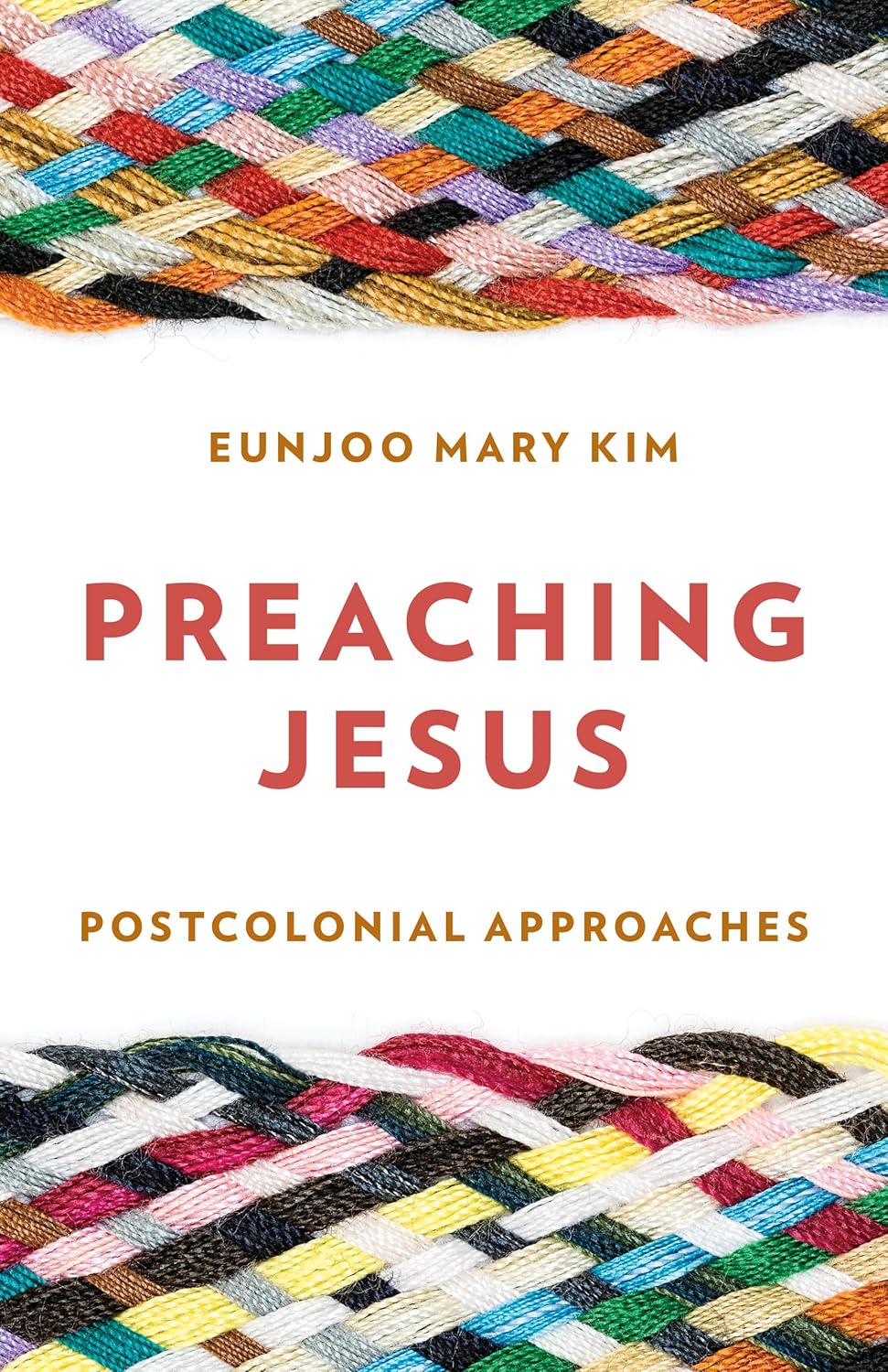
Eunjoo Mary Kim’s Preaching Jesus: Postcolonial Approaches offers a timely and original contribution to contemporary homiletics by reframing the proclamation of Jesus within the intertwined realities of colonial, postcolonial, and neocolonial histories. Existing monographs on preaching Jesus—primarily written for European American, middle- and upper-middle-class Protestant churches—tend to overlook the globalized, multicultural, and unequal world in which preaching now takes place. They also fail to account for Jesus’ historical identity as a colonized Jew under Roman imperial rule and the ways Western colonialism has shaped subsequent Christologies. Against this background, Kim’s work fills a critical lacuna by offering a distinctly postcolonial voice for engaging Jesus in preaching.
Kim structures her study around a central question: “What would it be like to preach Jesus from a postcolonial perspective?” (xi) She argues that the task of preaching in our complex world is to nurture difference, cultivate solidarity, and awaken communities to the work of reconciliation amid racialized, gendered, cultural, and economic fractures. Preaching Jesus, therefore, becomes a prophetic practice—one that resists colonial distortions of Jesus’ identity while inviting congregations to imagine life together marked by justice and peace.
Across five concise chapters, Kim presents five hybrid cultural images of Jesus: postcolonial self (Ch. 1), song (Ch. 2), child (Ch. 3), body (Ch. 4), and friend (Ch. 5). Each image is developed through a distinct postcolonial hermeneutical and homiletical method, including feminist interpretation, cultural criticism, phenomenological philosophy, intertextuality, and postcolonial biblical studies. This breadth is not merely methodological variety but a theological argument: there is no single way to preach Jesus from a postcolonial perspective. Multiple approaches are required to reflect the complexity of colonial histories and the diversity of contemporary listeners.
Kim’s chapter-length case studies on specific Gospel texts exemplify this claim. In the first chapter, John 4 becomes a site for exploring hybridity and mutual recognition between Jesus and the Samaritan woman; in the second, Luke 1 reveals Mary’s Magnificat as a postcolonial song envisioning God’s humanizing future; in the third, Matthew 2 exposes Jesus’ vulnerability as a migrant child shaped by imperial violence; in the fourth, John 20 portrays Jesus’ resurrection scars as signs of reconciliation between colonizers and colonized; and in the last, Matthew 28 reframes the Great Commission by presenting Jesus as a postcolonial friend rather than an imperial commander. The book concludes with a sermon, “A Letter to Mary and Elizabeth” (Luke 1:39-45), which creatively extends the postcolonial imagination developed in Chapter 2 and serves as a concrete demonstration of Kim’s homiletical vision.
If the book has a limitation, it lies mainly in its brevity. Its clarity, accessibility, and focused argument leave readers wanting additional case studies; readers may therefore desire further sermon examples or extended demonstrations of how postcolonial approaches can be enacted in preaching practice. However, Kim anticipates this critique, describing the text as “an open invitation” (xvii) for further chapters in postcolonial preaching—an invitation she extends to scholars, teachers, and practitioners alike.
Kim’s study ultimately raises a crucial question for the discipline of homiletics: What images of Jesus—hybrid, multicultural, and historically grounded—do preachers carry into the pulpit, and how do these images shape the identities our sermons invite? Preaching Jesus: Postcolonial Approaches ensures that this question will remain central for homiletics today.
Jae Jun “Daniel” Cho
Vanderbilt University
Categories: (W) Book Review


Leave a comment