

Worship space is a fundamental concept in Christian church practice, signifying where and how the community gathers to “worship the Incarnate One” and assemble as the Body of Christ.[1] Traditionally, it refers to a “space that marks the temporary separation of the community from the world outside.”[2] In such locations, through acts of worship such as the proclamation of the Word and performance of sacraments, individuals gather as a Christian community to listen to and communicate with God.[3] In the Reformed tradition, the preached Word and sacraments are essential for directing believers to God’s grace.[4] True worship, as John Calvin emphasizes, must be instituted by God’s Word.[5] Worshippers have historically transformed the interior space of churches by making the pulpit the focal point.[6] Generally speaking, worship space refers to both the physical and spiritual realms where the Christian community engages in acts of worship to experience a union with God in a collective form.
In a postcolonial world that acknowledges the ongoing impact of colonialism, however, worship spaces are inherently “shifting and unstable.”[7] This instability reflects a broader global context characterized by complexity, fluidity, and hybridity.[8] In such a dynamic environment, worship space is not necessarily a place for temporary separation from the secular; it can occur wherever the Christian body gathers.[9] Preaching and worship spaces become liminal and cross-boundary, adapting to diverse ways in which the proclamation of the Word occurs. Recognizing the global complexity and interconnectedness of postcolonial living spaces, worship extends beyond conventional church settings, reflecting the fluid and hybrid nature of contemporary life. This means that the spaces where worship takes place are not fixed but are constantly being redefined and renegotiated. They become sites where traditional religious practices intersect with broader social, cultural, and political dynamics, allowing for a more inclusive and multifaceted expression of faith. In this liminal and cross-boundary context, the proclamation of the Word transcends geographical and cultural barriers, taking place not only in traditional churches but also in public squares and online platforms as it adapts to the needs of a globalized, postcolonial society.
This paper examines the Anti-Extradition Law Amendment Bill (Anti-ELAB) Movement in Hong Kong as a case study of this redefined worship space. During the movement, Christians brought worship into the streets, transforming protest spaces into temporary worship spaces. This intersection between religious and protest spaces, embodied by the collective Christian bodies participating in the movement, echoes with Bernd Wannenwetsch’s argument that worship is not only a site of divine encounter, but a formative space where Christian ethics emerge, shaping social behavior and public engagement according to the gospel.[10] By incorporating elements of proclamation, participation, and service into their acts of political resistance, this paper argues that Christians in the Anti-ELAB Movement blurred the lines between religious and political spheres, prompting a reflection on the meaning and ethical implications of worship in today’s world.
Existing studies have provided valuable macro-level analyses of church-state relations in Hong Kong. For example, Lida Nedilsky explores the role of Christian entrepreneurship in political and economic liberalization,[11] while Shun-Hing Chan, in his edited volume, introduces various civil society theories and emphasizes the role of Christians in building civil society during the Occupy Movement in Hong Kong from 2013-2014.[12] The volume edited by Kwok Pui-lan and Francis Yip examines the “legal, political, and religious tensions” in Hong Kong,[13] framing Christian activism within political theology. Contributing to the conversation, this paper aims to offer a micro-level perspective that focuses on the lived experiences of Christian bodies in the Anti-ELAB Movement. By examining how everyday acts of worship transformed protest spaces into sites of religious significance, this study reveals how integrating worship into political resistance redefines both worship and activism.
Context: The Increasingly Visibility of Christian Participation from the UM to the Anti-ELAB Movement
Hong Kong, a former British colony, was handed over to the People’s Republic of China (PRC) in 1997 under the “One Country, Two Systems” (一國兩制) principle, which aimed to preserve the socio-economic stability of Hong Kong by promising the city to continue its existing governing system and political autonomy for fifty years.[14] During the colonial period, Christian social activism existed,[15] but Hong Kong’s churches have long been criticized for remaining politically aloof,[16] perceived as “pro-establishment, homophobic, irrelevant, and protesting only when issues affect them directly.”[17] Christians have been accused of retreating into their churches and losing touch with the broader society. By and large, worship remained confined to the space within church walls, with little connection to the outside world. In recent years, this perception has shifted. The Umbrella Movement (UM) in 2014[18] and the Anti-Extradition Law Amendment Bill (Anti-ELAB) Movement[19] in 2019-2020 marked significant phases of political activism, highlighting a growing Christian presence. Notably, the Anti-ELAB Movement saw a notable escalation in the visibility and influence of Christian bodies, signaling a transformation in their engagement with political resistance in Hong Kong.
The Umbrella Movement (UM)
To argue that Christian participation was more visible in the Anti-ELAB Movement does not dismiss the role Christians played in the UM. Despite the relatively small number of Christians in Hong Kong,[20] they were notably active in the UM. Two of the three main figures in the Occupy Central with Love and Peace (OCLP) campaign were Christians: Dr. Benny Tai Yiu-ting 戴耀廷, a devoted evangelical Protestant and former law professor at the University of Hong Kong, and Reverend Chu Yiu-ming 朱耀明, a veteran Baptist pastor known for his long-standing advocacy for democracy and human rights.[21] Prominent figures like Joshua Wong Chi-fung 黃之鋒, a student leader with an evangelical background,[22] also played a key role as the founder of the pro-democracy group Scholarism 學民思潮. Christian involvement during the UM included visible acts of worship and service, such as prayers, hymn singing, providing food, first aid, shelter, and Bible readings in the streets to express God’s love.[23] Compared to other religious groups like Buddhists and Taoists, Christianity was more visibly active.[24]
However, despite this involvement, the impact on public perception remained limited. Most churches were hesitant to respond to the UM, grappling with theological concerns about “the separation of church and state” and fearing repercussions for their ministry work in mainland China.[25] Churches that openly sympathized with the UM risked being labeled anti-government. As a result, public statements from churches or Christian organizations as collective Christian bodies were rare. Many young people were disappointed with “many churches’ silence, low participation, and insufficient support.”[26] Christian activists acted on personal convictions and individual Christian identities. This individualistic approach limited the broader impact of Christian activism in Hong Kong, as it lacked official church endorsement. While the UM began to challenge the notion of worship spaces, it was the Anti-ELAB Movement that “broke” the church walls, further blurring the boundaries between religious and political spaces through visible Christian participation
The Anti-ELAB Movement
Unlike the UM, where Christian involvement was largely driven by individual leaders, the Anti-ELAB Movement saw a more collective and visible Christian presence. Churches, pastors, and Christian organizations played a significant role, blurring the lines between religious and political spheres from the lens of worship. This shift reflected a transformation in Christian activism, altering the nature and scope of Christian activism in Hong Kong.
Learning from the shortcomings of the UM, more churches, pastors, Christian laypeople, and organizations actively participated in the Anti-ELAB Movement. Frontline involvement in various forms grew substantially, with local churches and pastoral organizations orchestrating campaigns to protect protesters. For instance, while the Pastoral Care Team (PCT) in the UM comprised around sixty ministers and seminarians,[27] the Anti-ELAB Movement saw over a hundred ministers join. Supported by groups like the Hong Kong Christian Pastoral Joint Committee (香港基督教教牧聯署籌委會)[28] and the Hong Kong Christian Institute and Citizens in Mission, they launched petitions and hosted prayer gatherings, including a 72-hour “prayerthon” from June 10 to 12.[29] This broader participation utilized the government’s policy that exempted religious meetings from permit requirements, enabling large-scale public gatherings with religious characteristics attended by thousands. Prominent Catholic and Protestant leaders joined the protests, holding large crosses on the street to signify the Christian presence in the movement.[30] Pastors, visibly marked by their vests and collars, served as buffers between protesters and police,[31] while some churches continued opening their doors to shelter and support demonstrators as they had done in the UM.
In addition to individuals’ and churches’ participation, theological institutions also shifted their stance. The Hong Kong Theological Education Association (HKTEA), representing fourteen seminaries from various denominations, moved from a cautious 2014 statement to a clear opposition against the extradition bill in 2019.[32]This change illustrated growing theological engagement with social issues. Although divergent opinions on the political position of the church have split local churches and denominations,[33] the protests fostered cooperation between progressive and conservative churches, reflecting newfound solidarity in the face of political adversity. Christian participation in the Anti-ELAB Movement blurred religious and political boundaries, uniting believers across denominations and connecting them with non-Christian protesters in shared resistance.
Increasingly Visible Christian Worship and Activism: From UM to Anti-ELAB
The shift from the 2014 UM to the 2019-20 Anti-ELAB Movement highlights an increasingly visible presence of Christian bodies in Hong Kong’s political landscape. Unlike the UM, where Christian involvement was mostly individual, the Anti-ELAB Movement saw churches, ministers, laypeople, and religious organizations participate collectively. This collective engagement made the Christian presence more notable and visible to the public, demonstrating a shift in attitude among churches.
Internally, the early involvement of churches in the Anti-ELAB protests provided Christians with a strong spiritual affirmation of their participation in both past and ongoing movements. Even when church-organized events decreased in the later stages, Christian protesters still felt supported by the broader faith community, providing them with spiritual legitimacy and motivation. Externally, the failure of the UM sparked reflection on diverse forms of resistance, leading the Anti-ELAB Movement to adopt a leaderless, multi-faceted approach summarized by the slogan “兄弟爬山,各自努力” [brothers climb mountains together, but by their own efforts].[34] This openness created a space for Christians to perform their protests creatively with religious resources, yielding a variety of forms of protests that involved Christian worship elements. As a result, public perception of Christian activism shifted, recognizing it as a more integral part of the movement. This dynamic was reciprocal and relational. Influenced by the failure of the UM and the following reflection, the political environment became more inclusive of diverse protest forms, giving spaces for varied Christian political expressions to come into being. In turn, this visibility reshaped public perception, further encouraging Christian participation. This interactive process blurred the lines between religious and political spheres, redefining traditional worship spaces.
In the context of worship space in a postcolonial world, the Anti-ELAB Movement exemplifies how worship spaces can extend beyond church walls. Christians brought worship into the streets, transforming protest sites into temporary worship spaces. This adaptation challenged conventional boundaries and showcased the fluidity of worship in contemporary society.
Through gatherings, gospel proclamation, and the sharing of the Lord’s Supper, Christians demonstrated how worship transcends physical and cultural barriers. This blending of faith and activism reimagines worship as a public, multifaceted expression of solidarity and justice. The following section will explore how Christian participation in the Anti-ELAB Movement embodied this blending of worship and political resistance, focusing on the dynamics of Christian bodies gathering, proclamation of the Word, and acts of service.
The Visible Christian Bodies Worshipping in the Anti-ELAB Movement
The Anti-ELAB Movement in Hong Kong exemplified how traditional elements of worship—where and how the Christian community gathers to worship Christ, who suffers for us—can be woven into acts of political resistance. This section explores the dynamics of Christian bodies worshipping in protest through the lens of space (where) and content (what and how). It argues that these acts blur the seemingly rigid boundaries between church and protest arenas, merging worship and protest action. As a result, public spaces were transformed into sites of both religious and political significance.
Worship Space: Gathering Christian Bodies in Dangerous Protest Sites
In Christian worship, gathering is a fundamental act where believers express their faith collectively. During the Anti-ELAB Movement, the act of gathering took on new meaning as Christians assembled in public spaces to protest. These visible gatherings of Christian bodies, marked by distinct religious symbols, served as a powerful form of worship and political resistance with a profound sense of solidarity and collective identity. Judith Butler posits that bodily acts, as an enactment of norms that precede and act upon us, can become performative.[35] Public assemblies serve as plural forms of performative action, “laying claim to the power one requires.” They are signifying in nature and extend beyond vocal and written speeches.[36] These gathered bodies symbolize ethical and political significance, where precarity becomes a form of resistance. Gathered bodies in the protest space signify how precarity can become the performance of unspeakable and suffering people disrupting the social norms.[37] For marginalized groups, public assembly disrupts social norms, creating “moments of slippage, disorder, and outright resistance” that reimagine societal practices.[38] By appearing together in protest spaces, the precarious appearance of gathered bodies poses ethical demands through their very presence.
In the Anti-ELAB Movement, the highly visible gathered Christian bodies, adorned with religious symbols, became a profound form of worship. Holding crosses, carrying Bibles, wearing vests with “Pastor” signs, and donning t-shirts with Christian slogans blurred the seemingly rigid boundaries between political and worship spaces. These visible signs of faith explicitly identified the participants as Christians, embedding their religious identity into the political landscape. The visible presence of Christian bodies in the movement conveyed a clear message that “God is here” in the political arena. Simply by appearing at protests, Christian bodies gathered to perform an unspoken declaration of faith and justice, embedding their religious identity into the political landscape and challenging the notion that worship is confined to church walls.
An illustrative example of how Christians used their whole bodies in the protest is the singing of the hymn Sing Hallelujah to the Lord. In the earlier stage of the protests, this hymn became the unofficial anthem embraced by both Christian and non-Christian protesters. On the night of June 11, 2019, during a prayer gathering at Tamar Park near the central government building, tensions between protesters and police had escalated. When the gathering concluded with Sing Hallelujah to the Lord, the singing continued uninterrupted for about 11 hours, from 10:30 pm to 9:00 am, creating what many described as a “pacifying effect” on both sides.[39] In the weeks that followed, this hymn was sung repeatedly at various protest sites. Through this collective act of singing, Christian protesters used their gathered bodies as instruments of both worship and political resistance. This collective performance transformed public spaces into arenas of non-violent protest, demonstrating how worship could become a visible declaration of faith and solidarity. The power of this act lay in its embodied nature—protesters standing together, singing in unison, making their faith both audible and political. In this way, hymn-singing became a profound expression of worship beyond traditional church walls (figure 1).[40]
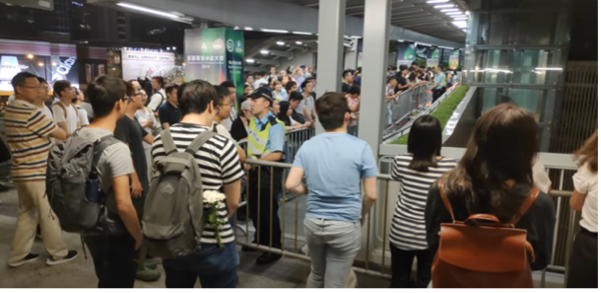
Figure 1. Screenshot from YouTube capturing a police officer surrounded by Christians and citizens singing Sing Hallelujah to the Lord for over 4 hours on the footbridge leading to the Government Headquarters on June 11, 2019.
The act of gathering as visible Christians in the Anti-ELAB Movement also embodied a mindset of embracing suffering and precariousness. From June to December 2019, police “fired more than 16,000 rounds of tear gas…6,000 rounds of rubber bullets and 19 live rounds,”[41] wounding many protesters, journalists, and first-aid helpers. The protest sites resembled war zones, filled with physical and emotional wounds. Threats to life and signs of pain were everywhere. Entering or remaining in these areas meant accepting the risk of injury or imprisonment. By joining the protests as visibly identifiable Christians, these individuals subjected themselves to the same risks as other protesters, highlighting their solidarity with the broader movement and their commitment to justice and human dignity. Despite the risks, Christian ministers remained in these “dangerous zones” to serve peacemakers and comforters. At various moments, Christian ministers formed human barriers, holding hands and standing between protesters and riot police. With the hope of serving as a buffer, those Christian ministers embodied the message of God’s love by using their bodies to protect the protesters from the potential violence resulting from the police’s suppression.
The Christian volunteer group Protect the Children, formed by pastors and church members, exemplified a willingness to share in the suffering of protesters. With the sacrificial plea—“beat us, don’t beat the kids”[42]— these Christians consistently appeared at protest sites. Offering their vulnerable bodies in prayer, accompanying young activists, and sometimes serving as shields, their act of embracing pain in a religious-political space, according to Talal Asad, transformed their openness to pain into “the structure of their agency as Christians.”[43] Such action enacted and affirmed their human agency by turning this painful experience from a passive state into an active, agentive expression of faith, turning sacrifice into political action. Their painful experience was not merely a private experience but also public and social.[44] By performing as painful bodies together with other non-Christian activists, Christians actively connected themselves with other protesters through their embrace of pain and enactment of human agency. Beyond pastors, Christian photographers and journalists also took frontline roles, documenting the protests despite escalating dangers. Some of them launched the media platform White Night to share images and stories from the movement. [45] Identifying as both Christians and journalists, they drew on Psalm 139:12 as their mission: to expose the darkness in Hong Kong by bringing it into the light.[46]

Figure 2. Church workers appeared regularly at the protest front lines to be a buffer between police and demonstrators.
Protesting under the threat of violence and repression, the visible gathering of Christian bodies made themselves precarious bodies, vulnerable yet resolute (figure 2).[47] This vulnerability testified to their faith and commitment to justice, embodying the Christian principle of bearing witness through suffering. The visible gathering of Christians’ suffering bodies resonated with the Christian narrative of Christ’s own suffering and sacrifice. By making their faith visible in such precarious situations, Christians in the Anti-ELAB Movement mirrored the narrative of Christ’s passion, embodying a theology of the cross in their public witness. This is not to suggest that suffering itself is inherently good or desirable. Rather, it highlights the redemptive act of standing in solidarity with the oppressed, even in the face of pain and danger.
This act of gathering was thus not just a political statement but a profound expression of religious conviction and solidarity with the oppressed. Their openness to vulnerability in the protest space was not only a means to build a bridge for others to connect with the Christian bodies but also a form of political resistance. By placing their bodies in such a dangerous space, they testified to the authorities that they stood in solidarity with the protesters, supporting their ethical demands against the government’s decisions. This connection, formed by a shared experience of exposure to danger and pain, has provided a counternarrative to the notion of the missing Christian body in social movements. Christian protesters no longer remained distant from people participating in social movements but were themselves part of this precarious body pursuing social justice. By co-partaking in the danger and standing in pain with the protesters, the Christian bodies in protest have created a new connection and solidarity with the community as well as introduced a new way to connect and witness the suffering God to others in society.
Worship Content: Proclaim the Word of God in Various Forms
The Anti-ELAB Movement in Hong Kong not only redefined where worship could take place but also transformed the content of worship itself, integrating elements such as proclamation, prayer, and hymn singing into acts of political resistance in diverse and impactful ways. Butler connects social norms to the “ritualized repetition of norms,” emphasizing how everyday embodied rituals produce and reproduce social reality within a cultural context.[48] Using Pierre Bourdieu’s language, Butler highlights that both “performativity” and “habitus” involve daily socialization processes where people internalize norms from various social fields.[49] As Bourdieu describes, social space in a political context is “multi-dimensional,” where different fields of practice, such as religious, economic, and political fields, intersect and overlap.[50] Since human agents are living “across multiple fields of practice at once,” they have the ability to produce new performances and practices by creatively working with and from social norms.[51] In the Anti-ELAB Movement, the collective Christian bodies performing and engaging in worship acts within the protest spaces exemplified the intersection of religious and political fields, generating new meanings for witnessing and worshiping.
One significant form of worship in the movement was prayer meetings in the protest spaces. These gatherings were not just acts of worship but also platforms for proclaiming the Word of God and offering spiritual guidance amidst political turmoil. For example, the 72-hour “prayerthon” organized by the Hong Kong Pastors’ Network (香港教牧網絡) from June 10 to 12, 2019, featured a liturgy that included a call to worship, scripture readings, message reflections, intercessory prayers for Hong Kong, and the recitation of the Lord’s Prayer, culminating in a proclamation of faith.[52] These gatherings, held outside the main government building, brought together Christian bodies, including pastors, laypeople, and other protesters, to sing hymns, pray, preach, and lament the political situation in solidarity. Visibly, these acts of worship served to inspire and sustain the protesters. This continuous prayer vigil highlighted the dedication and resilience of the Christian community in the face of political adversity,[53] reflecting the merging of worship and political resistance.
Another poignant moment occurred during a demonstration on June 12, when a police officer made a discriminatory remark to a group of Christian ministers, challenging them to “ask your Jesus to come down and see us! [叫你的耶穌落黎見我地!]”[54] In response, public prayer gatherings soon adopted themes like “Jesus is among us” and “Ask Jesus to come down,” encouraging Christian participation in social issues. One such prayer gathering, titled “Ask Jesus to Come Down,” was organized by Slow Church 甦靈教會 on June 14, 2019.[55] During this gathering, the leader shared reflections and humorously remarked that the police officer was like a messenger from God, aligning with Christians’ hope for Christ’s second coming. The leader also highlighted the ecumenical nature of the prayer meeting, welcoming all to join. By creating a space for Christians from different denominations and non-Christians to worship together, the leader reminded participants that they did not have to agree with the prayer content, where God is the main subject. Participants were invited to join the gathering by saying “Amen” if they agreed with the prayers or to remain silent in solidarity with others.[56] This prayer gathering, attended by more than 500 participants, both Christians and non-Christians, broke the boundaries between religious and political spaces, creating a new mode of worship in the heart of protest (figure 3).[57]
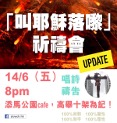
Figure 3. The poster of the public prayer gathering with the theme of “Jesus is among us.”
These dynamics underscore how the Anti-ELAB Movement integrated traditional elements of worship into the political landscape, transforming public spaces into sites of both religious and political significance. For instance, during the 72-hour prayer gathering, all protesters, including Christians and non-Christians, were invited to recite the Lord’s Prayer aloud, symbolizing unity and collective supplication for divine intervention. Such practices illustrated how the content of worship was adapted to address the immediate socio-political context, thereby merging worship with protest. As Wannenwetsch argues, gathered Christian worship recognizes and actualizes a political identity for the worshipping church.[58] In other words, political sites and worship site are inseparable, embodied by worshippers through their everyday acts of worship in public spheres. By incorporating worship elements such as prayers, the proclamation of the Word, and hymn singing into their acts of political resistance and making them open to both Christians and non-Christians, Christians in the Anti-ELAB Movement blurred the lines between religious and political spheres. This fusion created a more inclusive and multifaceted expression of worship in a postcolonial context, highlighting how liturgical acts can mobilize communities towards social and political transformation.
Conclusion: Bridging the Boundaries Between Political and Worship Spaces
Liturgical inclusion in protest embodies a “cooperative account of divine and human agency,” where God’s action is the foundation and possibility of all human activity and creative human agency.[59] Christian participation in the Anti-ELAB Movement forged a socio-political connection with society that is deeply tied to the response of human action towards God’s call for social justice, earnestly addressing the gap between our roles as worshippers and citizens. Gathering in protest sites, Christian visibly worshipped through various forms, including prayer meetings, hymn singing, and scriptural proclamation, transforming acts of political resistance into profound worship experiences, and vice versa. These practices not only addressed the socio-political context but also showcased the interconnectedness of faith and political activism. This blurring of sacred and political spaces reflects a broader postcolonial fluidity, where worship spaces are no longer static but constantly renegotiated. From the 2014 UM to the 2019–20 Anti-ELAB Movement, Christian bodies in Hong Kong reveals a dynamic change in the political environment which created a more welcoming space that made possible the integration of worship elements into the protests. These acts of faith blurred the lines between ecclesial and civic life, revealing worship as a lived theology that testifies to God’s justice and presence in the midst of socio-political upheaval. The collective Christian witness during these protests also prompts a necessary theological reflection: What if worship is not confined to church walls but is fundamentally reimagined as a public, embodied practice of justice and solidarity? This rethinking invites a challenge to conventional notions of sacred space, suggesting that the proclamation of the Word and communal acts of faith are not bound by geography but can flourish in the most unexpected places. This case study illustrates that the church’s role in the struggle for justice is not simply supportive but sacramental, transforming political spaces into arenas of divine encounter. Worship beyond walls is not just an adaptation to crisis; it is a prophetic expression of faith, insisting that sacred space is wherever believers gather to live out God’s call for justice and peace.
Wing Yi Wong
Atlantic School of Theology
[1] James F. White, Introduction to Christian Worship, 3rd ed. (Nashville, TN: Abingdon, 2001), 82.
[2] White, Introduction to Christian Worship, 86.
[3] Siebein explores how the acoustic environment shapes the worship experience, highlighting the theological and sensory dimensions of listening in sacred spaces. Gary Siebein, “The Soundscape of Worship,” in Worship Space Acoustics: 3 Decades of Design (New York: Springer, 2016), 3.
[4] Dirk G. Lange, “Martin Luther’s Reform of Worship,” in Oxford Research Encyclopedia of Religion (Oxford University Press, 2017), 1.
[5] “In the Epistle to the Colossians, then, he maintains that the doctrine of the true worship of God is not to be sought from men, because the Lord has faithfully and fully taught us in what way he is to be worshipped.” John Calvin, Institutes of the Christian Religion, ed. John T. Mcneill, trans. Ford Lewis Battles (Louisville, Kentucky: Westminster John Knox Press, 2006), 4.10.8.
[6] Donald J. Bruggink and Carl H. Droppers, Christ and Architecture: Building Presbyterian/Reformed Churches (Grand Rapids: Eerdmans, 1965), 81-81. See also Jack C. Whytock, “The Reformation of Space for Public Worship: Past and Present – Continuing the Discussion,” In Die Skriflig: Tydskrif van Die Gereformeerde Teologiese Vereniging, 52, no. 3 (2018): 5.
[7] HyeRan Kim-Cragg, Postcolonial Preaching: Creating a Ripple Effect (Lanham: Lexington Books, 2021), 47.
[8] In her discussion of intercultural churches within postcolonial contexts, Kwok notes that “these [hybrid church] communities also display a greater understanding of a spectrum of different types of hybridity—some do not challenge the status quo while others aim to subvert and destabilize the center.” Kwok Pui-lan, Postcolonial Politics and Theology: Unraveling Empire for a Global World (Louisville, Kentucky: Westminster John Knox Press, 2021), 157.
[9] See Matt 18:20 (NRSVUE): “For where two or three are gathered in my name, I am there among them.”
[10] “For Christians, the experience of worship is seminal. It is here that they experience the presence of the acting and judging God in a formative way; and here, at the same time, a reflective ethics will emerge among them—social behaviour guided by ‘the law of the Spirit’ (Rom 8:2), a form of living which takes in all the different sectors of existence. Accordingly, the purpose of our present study is to describe worship as being in the fullest sense a form of life.” Bernd Wannenwetsch, Political Worship: Ethics for Christian Citizens (Oxford University Press, 2004), 5.
[11] “…I cast Christianity in a new light that reveals how Christian entrepreneurialism, like political entrepreneurialism, performs a liberalizing role.” Lida V. Nedilsky, “The Liberalizing Role of Startups in Hong Kong Religion and Politics,” in Citizens of Two Kingdoms: Civil Society and Christian Religion in Greater China, ed. Shun-hing Chan and Jonathan W. Johnson (Leiden, The Netherlands: Brill, 2021), 155-6.
[12] Shun-hing Chan, “Christians and Building Civil Society in Hong Kong,” in Citizens of Two Kingdoms: Civil Society and Christian Religion in Greater China, ed. Shun-hing Chan and Jonathan W. Johnson (Leiden, The Netherlands: Brill, 2021).
[13] Kwok Pui-lan and Francis Ching-Wah Yip, eds., The Hong Kong Protests and Political Theology (Lanham, Maryland: Rowman & Littlefield, 2021), 6.
[14] For further details, see Cora Y.T. Hui, Securitization of the Umbrella Movement in Hong Kong: The Rise of a Patriotocratic System, 1st ed. (London: Routledge, 2020), 1-14.
[15] Jenny McGill et al., “Social Activism amid Multiple Identities: Christians in Hong Kong,” International Bulletin of Mission Research, 44, no. no.4 (2020): 351-61. See also Hong Kong Church Renewal Movement (HKCRM), “香港基督徒在現今社會及政治變遷中所持的信念 [The beliefs of Hong Kong Christians in today’s social and political changes],” 香港教會更新運動 (HKCRM), April 16, 2013, https://hkchurch.wordpress.com/2013/04/16/.
[16] Fairbank Center Blog, “Hong Kong Protests,” Medium (blog), June 16, 2019, https://medium.com/fairbank-center/hong-kong-protests-8454768b1897.
[17] McGill et al., “Social Activism amid Multiple Identities,” 357.
[18] The Umbrella Movement was named after the protesters’ use of umbrellas as protection against police pepper spray and tear gas. The UM is widely recognized as a pivotal turning point in Hong Kong’s political landscape since its 1997 handover to China. Spanning from late September to mid-December 2014, the UM involved the occupation of three major commercial districts for 79 days and significantly impacted the subsequent radicalization of the Anti-ELAB Movement. The UM was primarily driven by demands for “genuine universal suffrage” (真普選), responding to the Chinese government’ s decision to deny genuine universal suffrage in the 2017 Hong Kong Chief Executive election. Many Hong Kong citizens perceived this decision as a violation of their democratic rights and a restriction on their freedom to choose their leader. Kwok and Yip, The Hong Kong Protests and Political Theology, 3. See also Luke Cooper and Wai-man Lam, eds., Citizenship, Identity and Social Movements in the New Hong Kong: Localism after the Umbrella Movement (London: Routledge, 2018), 1; Albert Lee Sui-hung, “Is Dialogue in the Church Still Feasible after the Hong Kong Protests?” in The Hong Kong Protests and Political Theology, ed. Kwok Pui-lan and Francis Yip (Lanham: Rowman & Littlefield, 2021), 142; Tse, Theological Reflections on the Hong Kong Umbrella Movement, 2; Francis Lap Fung Lee and Joseph Man Chan, Media and Protest Logics in the Digital Er: The Umbrella Movement in Hong Kong (Oxford University Press, 2018), 1; Cora Y.T. Hui, Securitization of the Umbrella Movement in Hong Kong: The Rise of a Patriotocratic System (London: Routledge, 2020).
[19] The Anti-Extradition Law Amendment Bill Movement (Anti-ELAB Movement), also known as the 2019-20 Hong Kong protests, was the largest and most enduring protest movement in Hong Kong’s history. It began in June 2019 in response to an extradition bill introduced by the government in April. This bill, which would have allowed transfers of fugitives or criminal suspects to Mainland China, was perceived as a breach of Hong Kong’s legal system and the One Country, Two Systems policy. For details, see Kwok and Yip, The Hong Kong Protests and Political Theology.
[20] According to the Hong Kong year book’s official statistic, with 480,000 Protestants and 379,000 Catholics out of a total population of 7.34 million, approximately 11.7% of Hong Kong’s population were Christians in mid-2016. And during the period of 2014-2016, it is estimated that approximately 10-12% of Hong Kong’s population, which equates to around seven million people, identified themselves as Christians, including both Catholic and Protestant denominations. Development Bureau, “Religion and Custom,” Hong Kong Year Book (The Government of the Hong Kong Special Administrative Region of the People’s Republic of China, 2016), https://www.yearbook.gov.hk/2014/en/pdf/E20.pdf. See also Tse, Theological Reflections on the Hong Kong Umbrella Movement, 2; 許家欣, ““究竟香港有多少基督徒? [How Many Christians Are There in Hong Kong, Exactly?],” Christian Times, August 15, 2018, https://christiantimes.org.hk/Common/Reader/News/ShowNews.jsp?Nid=155319&Pid=104&Version=0&Cid=2053&Charset=gb2312.
[21] Stephan Ortmann, “The Umbrella Movement and Hong Kong’s Protracted Democratization Process,” Asian Affairs (London) 46, no. 1 (2015): 32. See also Ma and Cheng, The Umbrella Movement, 13; Chan, Media and Protest Logics in the Digital Era, 3; Copper, Citizenship, Identity and Social Movements in the New Hong Kong, 5.
[22] Tse, Theological Reflections on the Hong Kong Umbrella Movement, 2.
[23] Lap Yan Kung, “The Umbrella Movement and Kairos: The Church’s Theological Encounter with a Political Movement,” in Theological Reflections on the Hong Kong Umbrella Movement, ed. Justin K. H. Tse and Jonathan Y. Tan (Palgrave Macmillan, 2016), 113-6.
[24] Kung, “The Umbrella Movement and Kairos,” 111-2.
[25] Kung, “The Umbrella Movement and Kairos,” 115.
[26] Lee, “Is Dialogue in the Church Still Feasible After the Hong Kong Protests?,”149.
[27] Chi-wai胡志偉 Wu, “Zau Zeon Jin Coeng Dik ‘Gaau Muk Gwaan Waai Tyun’ 走進現場的「教牧關懷團」[Pastoral Caring Team Walks into the Scene],” Christian Times時代論壇, September 26, 2014, https://christiantimes.org.hk/Common/Reader/News/ShowNews.jsp?Nid=85548&Pid=6&Version=0&Cid=150&Charset=big5_hkscs.
[28] This committee also formed the well-known Pastors’ Network (“香港教牧網絡”) in Hong Kong in 2020.
[29] “「免於被擄的恐懼 同為這城求平安」祈禱運動 [Prayer Movement: ‘Free from the Fear of Captive and Seek Peace for the City’],” Christian Times, June 14, 2019, https://www.christiantimes.org.hk/Common/Reader/News/ShowNews.jsp?Nid=158255&Pid=105&Version=0&Cid=2029&Charset=big5_hkscs.
[30] Lee, “Is Dialogue in the Church Still Feasible After the Hong Kong Protests?,” 149, 153.
[31] Lee, “Is Dialogue in the Church Still Feasible After the Hong Kong Protests?,” 151.
[32] Lee, “Is Dialogue in the Church Still Feasible After the Hong Kong Protests?,” 150.
[33] Kwok and Yip, The Hong Kong Protests and Political Theology, 4.
[34] The University of Hong Kong’s Journalism and Media Studies Centre (HKU Journalism), “Hong Kong Protest Movement Data Archive: Glossary,” Hong Kong Free Press HKFP, August 5, 2020, http://hongkongfp.com/hong-kong-protest-movement-data-archive-glossary/.
[35] The term performativity used by Butler is different from, yet not in opposition to, the theatrical sense of “performance” where the subject intentionally performs. Judith Butler, Notes Toward a Performative Theory of Assembly (Harvard University Press, 2015), 31.
[36] Butler, Notes Toward a Performative Theory of Assembly, 8,58.
[37] Butler, Notes Toward a Performative Theory of Assembly, 58.
[38] Natalie Wigg-Stevenson, Ethnographic Theology : An Inquiry into the Production of Theological Knowledge (Palgrave Macmillan US, 2014), 58.
[39] Surprisingly, the performance of singing this hymn was initially rejected during the UM in 2014, reflecting the changing perspective on the performance of religious rituals in protest spaces from 2014 to 2019. During the UM, a group of around 40 Christian reverends attempted to use hymn singing to de-escalate tensions but were met with rejection by younger protesters who felt it was inappropriate for the setting. However, by 2019, the acceptance and integration of Christian worship rituals into the protests had grown significantly. The public’s reception of different forms of political expression, influenced by changes within the churches themselves, prepared the way for large-scale Christian participation in the Anti-ELAB Movement. Josephine Ma, “Hong Kong’s Protest Pastors: As Violence Escalates, Churches Struggle to Find a Place between Religion and Politics,” South China Morning Post, November 16, 2019, https://www.scmp.com/news/hong-kong/politics/article/3037977/hong-kongs-protest-pastors-violence-escalates-churches. See also 端傳媒, 2019香港風暴 :《端傳媒》反修例運動報導精選 [Storm in Hong Kong 2019] (Taipei: 春山出版有限公司, 2020), 86.
[40] 2019-06-11 Sing Si Zing Faa Nei Dik Sam 2019-06-11 聖詩淨化你的心 (Ft. Rocky 魔性笑聲) 高清片 [Hymns Purify Your Heart (Ft. Rocky’s Demonic Laughter) HD Video], YouTube (YouTube, 2019), https://www.youtube.com/watch?v=BL7Eqf4EXt0.
[41] Rhea Mogul, “PTSD and Protests: How the Violence on Hong Kong’s Streets Impacts Mental Health,” Hong Kong Free Press HKFP, December 15, 2019, http://hongkongfp.com/2019/12/15/ptsd-protests-violence-hong-kongs-streets-impacts-mental-health/.
[42] Protecting Hong Kong’s Young Protesters: “Beat Us, Don’t Beat the Kids” (BBC News, 2019), https://www.bbc.com/news/av/world-asia-china-50000995.
[43] Talal Asad, Formations of the Secular: Christianity, Islam, Modernity (Stanford University Press, 2003), 85.
[44] Asad, Formations of the Secular, 85.
[45] “White Night,” 2019, https://whitenighthk.media/. The site is no longer accessible.
[46] “even the darkness is not dark to you/the night is as bright as the day/for darkness is as light to you” (Psalm 139:12, NRSVUE).
[47] Jessie Yeung, “One Year after Hong Kong’s National Security Law, Residents Feel Beijing’s Tightening Grip,” CNN, June 29, 2021, sec. CNN World, https://www.cnn.com/2021/06/29/asia/hong-kong-nsl-one-year-intl-hnk-dst/index.html.
[48] Judith Butler, Bodies That Matter: On the Discursive Limits of “Sex” (Abingdon, Oxon: Routledge, 2011), x.
[49] Judith Butler, The Psychic Life of Power: Theories in Subjection (Stanford University Press, 1997), 199, 210.
[50] Pierre Bourdieu, Language and Symbolic Power, ed. John Thompson, trans. Gino Raymond and Matthew Adamson (Harvard University Press, 1991), 29, 40–41.
[51] Wigg-Stevenson, Ethnographic Theology, 21–22, 26.
[52] They drew upon various scriptures during the gatherings, including Jeremiah 29:7, Revelation 15:3–4, Psalm 29:10–11, and Psalm 1. Responsive petitions featured passages from Daniel 9:17–19, Revelation, Psalm 33:6–11, and Psalm 7. Pastors also preached from texts such as Luke 1:46–55, Psalm 10, Revelation 1:4–5, and Acts 3:12–16. “Hong Kong Pastor’s Network 香港教牧網絡,” Hong Kong Pastor’s Network 香港教牧網絡, 2019, https://hkpastors.net/.
[53] “「免於被擄的恐懼 同為這城求平安」祈禱運動 [Prayer Movement: ‘Free from the Fear of Captive and Seek Peace for the City’],” Christian Times, June 14, 2019, https://www.christiantimes.org.hk/Common/Reader/News/ShowNews.jsp?Nid=158255&Pid=105&Version=0&Cid=2029&Charset=big5_hkscs.
[54] Chris Lau, “Hong Kong Police Facing High Court Challenge Over Officer’s ‘Jesus’ Comment During Extradition Bill Protest,” June 19, 2019, sec. Hong Kong/ Law and Crime.
[55] Slow Church 甦靈教會, “「叫耶穌落黎」祈禱會 [‘Ask Jesus to Come Down’ Prayer Meeting],” Facebook, Slow Church, June 13, 2019, https://www.facebook.com/slowch.hk/photos/a.1540521259597408/2260215927627934.
[56] 曾雪雯 and 魯嘉裕, “逃犯條例: 500人出席「叫耶穌落嚟」祈禱會 唱聖歌全場和應 [Extradition Bill: 500 People Attend ‘Ask Jesus to Come’ Prayer Meeting, Sing Hymns in Unison],” Hong Kong 01, June 14, 2019, https://www.hk01.com/18區新聞/340876/逃犯條例-500人出席-叫耶穌落嚟-祈禱會-唱聖歌全場和應.
[57] Slow Church 甦靈教會, “「叫耶穌落黎」祈禱會 [‘Ask Jesus to Come Down’ Prayer Meeting].”
[58] “it [worship] forms a specific, social form of life, a communio in which believers find their basic political existence…every public service of worship in which a Christian congregation engages has a specifically political character, since it is the assembly of ‘Christian citizens’…” Bernd Wannenwetsch, Political Worship: Ethics for Christian Citizens (Oxford University Press, 2004), 7.
[59] Kyle Brent Thompson Lambelet, ¡Presente! : Nonviolent Politics and the Resurrection of the Dead (Washington, D.C: Georgetown University Press, 2019), 12.
Categories: (W) Article
 Asian American Theological Forum
Leave a comment