

1. Introduction
Fr. Stan, Rest not in Peace!
The intended humor apart, the above epitaph which featured in the JES-WIT section of JIVAN journal,[1] succinctly summarizes the life and the legacy of a Jesuit social activist, Fr. Stanislaus Swamy (henceforth, Stan). Stan dedicated much of his life to the welfare of the tribal communities (hereafter, adivasis[2]) in the State of Jharkhand, India[3]—particularly in their “struggle to claim their right to self-respect and dignity.”[4] Such a stance pitted him against the exploitative forces. Stan knew all too well the price that such a counter-hegemonic stance would entail. He paid exactly that prophetic price with his life when a collusion of the exploiters and the State apparatus delayed the octogenarian’s basic rights,[5] leading to his death. Paradoxically, his death, rather than silencing the social awakening among the adivasis, infused the movements that Stan helped found with fresh energy. In other words, Stan’s life was (i) a reckoning with the past of a continued exploitation, (ii) an avowal to serve the present liberative needs of the tribal communities in order to (iii) dream a future of rightful access to one’s own land and its resources. As such, these share in the triple temporal foci (past-present-future) of this special volume that celebrates the ten fruitful years of AATF.
Stan’s life and legacy shares similarities with many noble examples—both ancient and ours. Among the inspiring parallels from the ancient contexts, the Bible provides a rich variety of compelling examples: Moses, the Prophets, Jesus Christ, and his apostles—to name but a few. Within prophetic literature, the Servant figure in the Isaiah has many relevant contact points with Stan’s unwavering commitment to justice that called for an ethical awareness of equal rights of the people at the peripheries. The present chapter, therefore, (i) begins by outlining a general profile of the Servant in the four commonly agreed upon Servant songs (42:1-4; 49:1-6; 50:4-9; 52:13-53:12) in juxtaposition with the life and ministries of Stan, the apostle to the adivasis, in order to (ii) bring under light some inter(con)textual correlations that are relevant for (iii) outlining a prophetic ethic[6] for our times.
But first, a brief word on inter(con)textuality is in order.
2. Inter(con)textual reading
Since the arrival of a widely received work of Stanley Fish,[7] we are keenly aware that texts are not islands (or, standalone entities) and so are the interpretive subjects that read them. A somewhat similar disposition guides the inter(con)textual reading. Such a reading foregrounds a continued conversation between a text in its context and a reader in one’s context.[8] The contributions from a good number of global scholars (published under Text@Context series) are ready attestations to both the variety and the value of this interpretive approach.[9]
As regards the Servant songs, any context related query comes with its share of challenges. Critical scholarship since Duhm[10] has noted how the servant songs are unique in Isaiah 40-55. Nonetheless, debates continue regarding the questions of the number of songs, their text delimitations, compositions, and placements in the book.[11] Even the identity of the servant (עבד)[12] and the associated socio-historical context remain elusive.[13] Although much of these details are still under scholarly debate, the Servant figure in Isaiah never ceases to fire the theological and pastoral imaginations down the centuries.[14] Building on the figure’s continued pertinence, the present work outlines the profile that emerges from the four select songs. It is argued here that the same profile grants sufficient scope to juxtapose the Servant figure with the life and ministry of Stan. Figure 1. pictorially presents the said dynamic of the inter(con)textual juxtaposition.
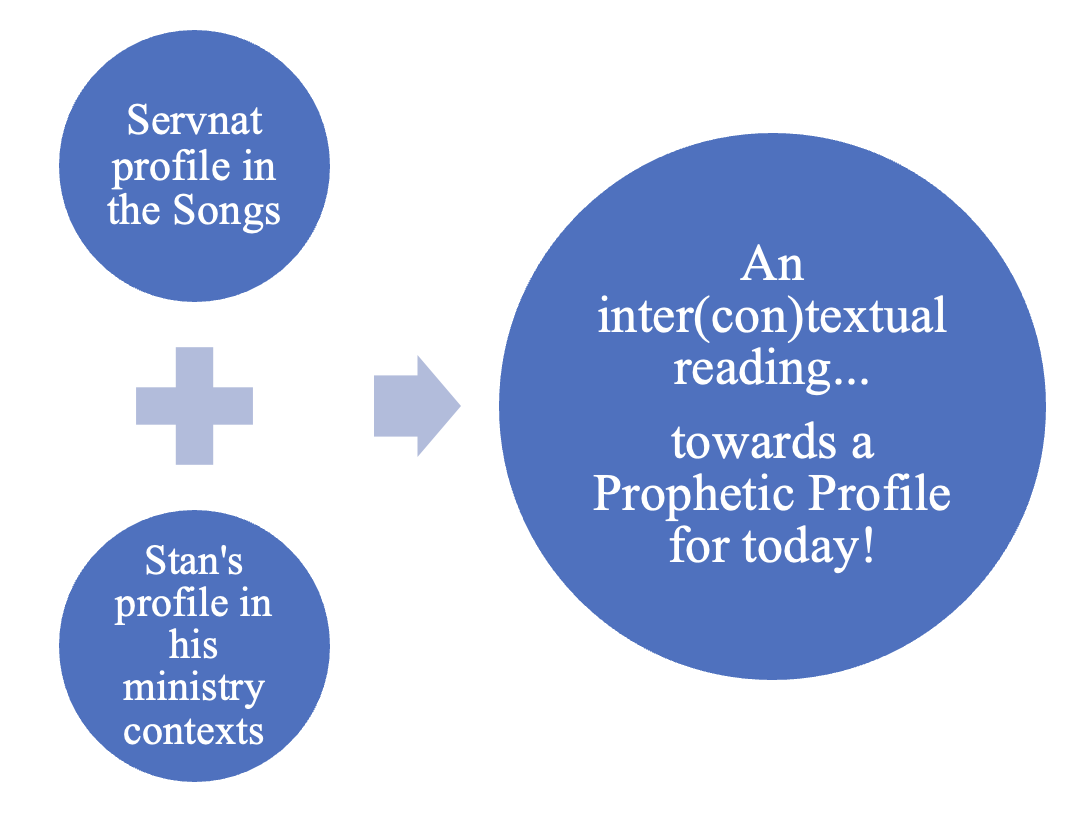
Figure 1. Inter(con)textual juxtaposition
3. Gentle Demeaner, Steely Resolve, and Justice-focused: Isaiah 42 and Stan
The Servant. A sequential reading of the book of Isaiah, particularly chaps. 40-55[15] encounters a notable change of tone as one transitions from chaps. 40-41 to chap. 42. Whereas the focus in the former two chapters is firmly on Yahweh’s work, in chap. 42, we hear an affirmation “that God’s work in the world is to be enacted by human agency.”[16] It is in this context that the readers are introduced to the figure of the Servant: the chosen one, in whom God’s soul delights (cf. 42:1a). In fact, God has put his spirit upon the Servant. The purpose of all these theologically rich attributes (chosen, delight, spirit) is at once made explicit: “to bring forth justice” (v.1b). An unmistakable focus on justice is at once obvious in the three occurrences of משׁפט (vv. 1, 3, 4) in this short pericope of just four verses. Even the word order, as Koole helpfully notes, attests to the centrality of justice: “The inversion of the sentence structure puts emphasis on the initially positioned object משׁפט.”[17] Beuken, on his part, underscores that משׁפט “constitutes a theme that knits the opening chapters of Second Isaiah and the Servant Songs together.”[18]
But what is justice?
Here, Brueggeman’s comments ring true: “The characteristic notion of justice, rooted in Mosaic tradition and explicated in prophetic utterance, is the reordering of social life and social power so that the weak (widows and orphans) may live a life of dignity, security, and well-being.”[19] Interestingly, in carrying out this biblically rooted justice-focused mission, the Servant’s demeaner is painted in a strikingly contrastive manner with a series of negatives. The Servant will not cry out; nor break a bruised reed; nor quench a dimly burning wick (v.2). Then, the portrayal concludes by repeating the earlier assertion in v.1: “he will faithfully bring forth justice” (v.3b). Finally, the pericope concludes by a resumption of the earlier negatives: he will not grow faint until he establishes justice (cf. v.4). In sum, “The striking series of negatives”[20] in vv.2-3 highlight “the simplicity” and yet the “persuasive power” of the servant’s message.[21]
As regards the cry of the Servant, Poulsen performs a survey of the root צעק in Isaiah (19:20; 33:7; 46:7; 65:4) and in the Hebrew Bible (Exod 22:22; 2 Kings 6:26) in order to outline the word’s semantic significance: “it seems plausible to understand the cry here as a cry of anguish.”[22] Interestingly, as the series of negatives underscore, the Servant in the first song does not cry! So, Poulsen goes on to say, “The silence of the servant is therefore not a denial of his ability to bring forth justice authoritatively. His silence is not a sign of weakness; rather he acts with quite impressiveness.”[23] In a similar fashion, Wilkins’ assessment of the Servant in Isaiah 42 states that “[t]his Servant has an unexpected demeanor. Far from an imposing figure of conquest, this is a picture of a gentle Servant … who will gently and humbly invite those who are the most in need.”[24] Poulsen’s perception also goes along the same way. The servant’s “appearance is characterized by quietness and unaggressive behavior.”[25] In short, the portrayal of the Servant in Isaiah 42 is a curious admixture of a gentle demeaner and yet a steely resolve to establish justice.
As regards the addressees of the Servant, the first song depicts that the coastlands will wait for his teaching (v.4). As McEntire notes that “coastland” occurs 36 times in the Hebrew Bible of which a good 17 occurrences are found in the book of Isaiah. In other words, it is a favourite word for Isaiah. The reference to coastlands in this song implies that the ministry of the Servant goes beyond the confines of Israel.[26]
Stan. Stan’s person and ministry share some similarities with these Servant traits. In commenting on Stan’s person, Nandini Sundar describes him as “A tall thin man with a spine of steel, there is something both wise and childlike about Stan.”[27] As regards Stan’s ministerial focus, the centrality of justice is hard to miss. Even a simple search on the word “justice” in Stan’s autobiography of just 118 pages yields an impressive 45 entries, attesting to the justice-guided ministry of Stan among the socially marginalized. Stan’s opening paragraph in the prologue says it all and it is appropriate to quote it entirely:
‘Why truth has become so bitter, dissent so intolerable, justice so out of reach?’ because truth has become very bitter to those in power and position, dissent, so unpalatable to the ruling elite, justice, so out of reach to the powerless, marginalised, deprived people. Yet, truth must be spoken, right to dissent must be upheld, and justice must reach the doorsteps of the poor. I am not a silent spectator.[28]
Stan’s call and the choice of ministry place also have similarities with the Servant profile. While narrating his call to religious life (as a Jesuit), Stan confides that the call took him from a southernmost Indian state (Tamil Nadu) to a distant northern part of the country: the adivasi societies in central India.[29] Stan’s ministry also included countries beyond India. When invited by these countries to initiate social awareness program, he confides, “I myself went to different parts of the country as well as to the neighbouring countries of Bangladesh and Sri Lanka to give training sessions.”[30] Not only was his ministerial outreach geographically distant from his birthplace, but his ministry preference is a witness to how he had a heart for the people at the peripheries whom he calls as his “first love.”[31] P. R. John’s comment captures well the same. Stan “spent most of his life with the people on the peripheries, especially the last nine-months in the extreme periphery – the prison.”[32]
In sum, the portrayal of the Servant—particularly, his cry (actually, a non-cry), his ministry’s unmistakable focus on justice, and that his addressees include people from far away nations and coastlands are some of the salient traits in the first Servant Song that meaningfully correlate with Stan’s person (gentle demeaner but steely resolve), pastoral choice (faraway lands and peripheral people), and ministry (justice focused).
4. Sharp as Sword, Task of Ingathering, Momentary Doubt, Profound Confidence: Isa 49 and Stan
The Servant. The second song of the Servant, as Baltzer notes, comes with three temporal references: (i) vv.1-4 exhibit strong references to the past (how the Lord chose the Servant from his mother’s womb, made him like a sharp sword and a polished arrow, and the declaration that the Lord gloried in the Servant); (ii) in v.5, the expression “but now,” makes a decisive temporal shift to the present; and (iii) v.6 moves even further as the future task of the Servant that goes beyond the bounds of Israel is spelt out.[33]
The first verse commences with the call of the Servant[34] before the latter’s birth, while he was still in his mother’s womb. Then, the outcome of the call is outlined in how the Lord made the Servant’s mouth like a sharp sword, together with the poetic parallel of the image of a polished arrow. Commenting on these images of weapons, Koole avers that “the Servant represents the One who as ‘Warrior’ (42:13; 59:17) defends himself against his adversaries and also challenges them with the offensive weapons of sword and arrow, Deut 32:42.”[35] This preparation paves the way for the divine task that the Servant receives: to bring back Jacob and gather the dispersed (v.5); to raise up the tribes of Jacob and restore the survivors (v.6). The compelling divine-enabling and the noble task of an ingathering of the scattered Israel[36] notwithstanding, the Servant surprisingly begins to speak of his labor in vain—although briefly. Within the same verse, however, his tone changes to one of confidence in the Lord (“surely my cause is with the LORD, and my reward with my God”).
Counting the triple mention of Israel[37] in the three subunits (vv.1-4; 5a; 5b-6) that form this pericope, Baltzer opines, “The fate of the Servant and the fate of Israel are connected.”[38] Further, the manner of the Servant’s mission bespeaks a vulnerable one ministering to the vulnerable ones, which according to Brueggemann is the “content for servanthood.”[39] The Servant’s task within a context of Deutero-Isaiah is focused on bringing back (שׁוב Polel) the people. Baltzer situates this task within the broader ambit of covenant: “people’s rebellion puts an end to the relationship with God, with the all the consequences that this breach involves… [However, now the] return means the ‘return to the original relationship with Yahweh.’ Its promise is that Yahweh is prepared for a ‘restoration of the original status.’”[40]
Stan. Turning to Stan’s life, his awareness programs and social ministries are marked by his sharp words and acts that on the one hand awakened the exploited adivasis and Dalits and on the other spoke truth to power. As regards the former, Stan narrates a moving incident of people’s claim to power even in the face of a State-supported atrocity: the Koel-Karo anti-displacement movement. The incident on 2 Feb 2001 saw a gathering of five thousand people, protesting against the government plans to construct dams across Koel and Karo rivers of Ranchi district which would have “submerged 132 villages, 30,000 acres of agricultural land and 20,000 acres of forest land.”[41] With an aim to quell the protest, the police resorted to shooting, killing 8 people and injuring many—some of whom were permanently handicapped. While the State thought that such a brutal response will see the people abandoning the movement, Stan writes that the State’s heartless response “had the opposite effect – people said that we’ve shed our blood; there was nothing more to lose and the movement became stronger.”[42] As regards the opposition that Stan faced from those in power, it is interesting that early in his career at the Indian Social Institute in Bangalore, the opposition to his ministry came not so much from the “outsiders” as from the “insiders.” Some Church authorities accused Stan and his team of propagating Marxism. In response, Stan came up with an idea of inviting some theologians who witnessed the commendable works done and their statement dispelled the doubts of the Church leaders.
Time and again, like the Servant, Stan threw in his lot with those whom he was ministering to. On hearing about his imminent arrest at 4 pm on the 27 June 2019, Stan’s response was both bold and an act of solidarity with the adivasis. He declared, “Okay let them [the police] come and take me, after all, have there not been thousands of Adivasi/Dalit youth languishing in the jails of Jharkhand with no succor reaching them?”[43] A lion’s share of Stan’s efforts was spent in bringing back the people, particularly those who were unlawfully incarcerated and with no legal recourse to seek. Further, his fight to get the land of the adivasis back to their traditional and lawful owners was nothing short of reclaiming the adivasi identity, which—as in the biblical tradition—is deeply tied to the land.
Despite Stan’s sharpness and noble tasks of gathering and bringing back the people, he had his moments of disappointment and doubt. For example, in a clear contradistinction to the cultural adage that “Truth will finally prevail,” Stan retorted saying “but how long is it going to take… and how much damage is being done in the process…”[44] Despite such disappointments, Stan consistently displayed his confidence and hope. For instance, even while languishing in Taloja prison, this apostle to the adivasis had this to write back: “Friends, we are in the season of Advent. As we approach Christmas, let us pray that Jesus may be born in Taloja prison, this year.”[45]
5. Ministry to the Wearied People: Isaiah 50 and Stan
The Servant.[46] Although the term “Servant” does not occur in the third Servant song, the content makes clear who the speaker is. The Servant’s voice is hard to miss as we are treated to his monologue. Nonetheless, the focus is still and firmly on the Lord as the expression “Lord God” occurs 3 times (vv. 4,7, 9). Whereas the previous song likened the Servant’s mouth to weapons of war (sword and arrow), now the focus shifts to how the Servant, with a teacher’s (or, taught) tongue, will comfort the weary with his word (v.4). While doing this God-given ministry, the Servant will be subjected to insults and humiliation (v.6). And yet, the Servant does not shy away from them because of his confidence and trust in the Lord (v.7). It is this enviable trust in the divine that enables the Servant to counter his opponents with questions that call to mind a court setting (v.8).
Comparing the suffering portrayal of servant with Jeremiah, Hanson highlights the significance: “Through personal suffering there steadily grows the capacity to uplift a whole community that has been driven close to spiritual defeat by the fierce blows of history.”[47]
Stan. As noted, Stan’s sociologically well-trained tongue sought to both conscientize and comfort the exploited adivasi populace. The results speak for the fruitfulness of Stan’s teaching. Prakash, for instance, recounts how Stan “helped form a group called the ‘Persecuted Prisoners’ Solidarity Committee’ that sought to do a study of the nature of undertrial prisoners (3,000 Adivasis [were] illegally put in jail) and to have recourse to legal action, so that justice can be done.”[48] Stan himself narrates the effect of his justice-focused mission. When the so-called development projects threatened to displace entire village habitations, the socially conscientized adivasis came “to the point of saying ‘enough is enough,’” leading to their taking up the challenge of governing themselves.[49]
Of course, the State apparatus could not bear to see such “aberrations” and resorted to legal measures to contain the social activist and the people who rallied around this well-trained teacher. Initially, an FIR (First Information Report) was filed against 11,200 unnamed villagers. And in the second FIR, some 20 intellectuals were singled out. Stan was unsurprisingly part of the list. Later, the accused were short-listed to a select five. This time, Stan’s name topped the list![50] These were preparations that paved the way for the police raids that followed. During these raids, the police took away the few things he had, and Stan was left with a bare cot in his small room. Yet, Stan found solace in the company of the people whom he was ministering to: “I am, now, left with my body, mind, conscience, and of course, the overwhelming solidarity from numerous friends, colleagues, and kith and kin.”[51]
The investigating officials claimed to have found in Stan’s computer a Naxal’s (a banned group) invite to Stan to attend the 50th anniversary of the origin of their movements. To which, Stan “flatly disowned these extracts and affirmed that they have been interpolated into [his] computer.”[52] Subsequently, during the court proceedings, Stan was the target of verbal abuse. Stan recounts that “during the hearing in the High Court, the Advocate General referred to [him] as a ‘dreaded criminal.’”[53] In short, the social activist’s experience was sad irony of events: “FROM trying to free innocent Under-Trial Prisoners TO myself being made an Under-Trial Prisoner.”[54] But through all these trials, like the Servant, Stan sought to sustain the weary with his well-trained tongue even while making his resolve as firm as flint to face the many insults, injuries, and the eventual imprisonment.
6. Suffering, Death, yet Legacy: Isaiah 52-53 and Stan
The Servant. The fourth and the longest song of the Servant details his suffering, death, and yet continued legacy. In fact, the poem begins with a theme of exaltation (52:13) and concludes with a similar note (53:12), thus making a meaningful envelop around the final song. Sandwiched between these two instances of exaltation, the song narrates how the Servant will undergo a series of suffering and humiliation.[55] In fact, like the first song, a modest profile[56] of the servant gets outlined here, comparing him to a young plant (53:2). Further, as though building on the details of humiliation that the third song lists, the fourth song presents a rejected and suffering Servant. The purpose of the same is said to be for the benefit of others (v.4).[57] Finally, by a perversion of justice, the Servant is cut off from the land of the living (v.8). Death, however, is not the final word as the song sings of the offspring that the Servant shall see (v.10). In fact, the Lord himself will allot a portion for the Servant with the great ones (v.12).
Stan. In a somewhat comparable fashion to the Servant in the last song, Stan’s life is a witness to initial success in Bangalore and posthumous praise from all quarters.[58] Sandwiched by these two positive instances, Stan’s life is a witness to endless challenges, suffering, and humiliation. Bandyopadhyay’s comments on Stan’s imprisonment says it all: “As a carceralized citizen, Father Stan Swamy embodied the dangerous potentialities of detention—denial of care, fair treatment, and fundamental rights, and eventual erasure through death for the average citizen.”[59] As in the case of the Servant, by a perversion of justice (v.8), Stan was accused through fabricated cases by the State police force.[60] Eventually, Stan died fighting against these unjust structures. His death, rather than extinguishing the prophetic fire that this social activist was breathing, poured fresh energy to the fights against exploitation of the adivasi communities. As Louis writes, “now Stan has found a place in their [adivasi] history, legacy, and heritage and above all in their struggle against the diku exploiters of all kinds. His name is inscribed in the martyrs list in the ‘Pathalgadi’.”[61] P. R. John echoes the same: “The death of Stan, though powerless, still speaks – ‘I am not a silent spectator, I am part of the game.’”[62] As such, Prakash’s description is apt: “one of the great prophets and martyrs of our times: Fr. Stan Swamy”[63]
7. Conclusion: A Prophetic Profile for Our Times
At the completion of his 6 months in prison, Stan penned a poem on the New Year Day.
May the new flame
Help us discern Truth from untruth
And hold fast to truth
May Truth embolden us
To speak truth to power
And be ready to pay the price[64]
Gentle demeaner, steely resolve, and justice-focused mission of Stan is characterized by his unwavering prophetic spirit that found expressions in his sharp words that critiqued the exploiters and comforted the exploited. Despite his own shares of disappointments, Stan found strength to reach out to the weary adivasi communities. His fight was long and arduous. And he knew it. “The way of the cross,” as Stan understood it “is long, and we have to walk it till the end with the mutual concern and solidarity we share together.”[65] Stand did exactly that by dedicating his life “to defend the unlettered and undernourished from the exploitation of a minority and to win back dignity for a dehumanized people’. If such noble efforts lead one to death, then death is to be understood as the vocation of life, the fulfillment of humans and the point of total humanization.”[66] Stan died a martyr’s death but not without leaving a rich legacy. As Dias notes, Stan is “to South Asia what the El Salvadoran Martyrs at the UCA in San Salvador were to Latin America, another poorer region of the world. These two are iconic symbols of Justice for our times, and rights defenders all over the world, will continue to derive inspiration and courage from these non-violent brave-hearts.”[67] Such brave hearts help us cultivate our everyday ethical commitments after the examples of justice-centered prophetic profiles such as the Isaian Servant and Stan. With such commitments, we would be able to declare with courage, “A caged bird can still sing”[68]—as Stan himself did!
Dominic S. Irudayaraj
The Pontifical Biblical Institute
[1] Trevor Miranda SJ, “JES-WIT,” JIVAN: News and Views of Jesuits in India, February 2022, 2.
[2] Commenting on Stan Swamy’s preference for adivasi, Xavier Jeyaraj notes that this term “gives a sense of identity and dignity as opposed to the official term of Scheduled Tribes (ST) or simply tribals [which are] given by others.” See Xavier Jeyaraj SJ, “Stan Swamy: A Jesuit Who Built His House on Rock” (Rome, July 2022), 1 n.1. My gratitude goes out to Jeyaraj for generously sharing the English version of his paper. For the published, Italian version, see https://www.aggiornamentisociali.it/articoli/stan-swamy-martire-per-gli-adivasi/
[3] “The Jharkhand movement, one of the longest people’s movements of independent India’s history, demanded a separate state for Adivasis. Although, the Jharkhand region was separated and given the status of a separate state, its resources and state power are still with dikus, that is, alien exploitive powers who do not recognize and respect Adivasi rights and self-determination. And these alien powers have been forcing the Adivasis towards economic destitution and penury.” Tony P. M. SJ, “Uncompromising Stan(d) against Injustice: In Solidarity with the Adivasis,” JIVAN: News and Views of Jesuits in India, February 2022, 17.
[4] Stan Swamy, I Am Not a Silent Spectator: Why Truth Has Become so Bitter, Dissent so Intolerable, Justice so out of Reach (Bangalore: Indian Social Institute, 2021), 7.
[5] Not only was Stan repeatedly refused a bail and therefore access to health facilities but also his essential need for a sipper (he was suffering from Parkinson’s disease) fell on the deaf ears!
[6] Here, I follow Jensen’s description of prophetic ethics as a courageous voice that dares to speak truth to power, particularly in matters concerning social justice. For the source of the prophetic ethics, scholars suggest covenant, law, wisdom, and prophetic experience. All the same, none of these can be claimed as an exclusive source. See Joseph Jensen, Ethical Dimensions of the Prophets (Collegeville, MN: Liturgical Press, 2006), 15.
[7] Stanley Fish, Is There a Text in This Class? The Authority of Interpretive Communities (Cambridge, MA: Harvard University Press, 1980).
[8] The Texts @ Contexts series aims to gathers “scholarly voices from diverse contexts and social locations to bring new or unfamiliar facets of biblical texts to light.” See Athalya Brenner, Archie Chi Chung Lee, and Gale A. Yee, eds., Genesis, Texts @ Contexts (Minneapolis, MN: Fortress Press, 2010). Athalya Brenner and Gale A. Yee, eds., Joshua and Judges, Texts @ Contexts (Minneapolis, MN: Fortress Press, 2013). Athalya Brenner-Idan, Gale A. Yee, and Archie C. C. Lee, eds., The Five Scrolls, Texts @ Contexts (Bloomsbury T&T Clark, 2018).
[9] My contribution, for example, attempted to read the pericope that depicts David’s takeover of Jerusalem from my multi-religious and therefore agonistic Indian context. In doing so, the itner(con)textual journey helped me in highlighting some of the identity-adumbrating traits in an otherwise violent biblical text. See Dominic S. Irudayaraj, “David Hates the Lame and the Blind: Towards An Inter(Con)Textual Reading of 2 Sam 5.6–9,” in Samuel, Kings, Chronicles, Ezra-Nehemiah, ed. Athalya Brenner-Idan and Gale A. Yee, vol. 2, Texts @ Contexts Series (London: Bloomsbury T&T Clark, 2021), 9–29.
[10] B. Duhm, Das Buch Jesaja, HKAT (Göttingen: Vandenhoeck & Ruprecht, 1892).
[11] For a survey with relevant resources, see Harry M. Orlinsky and Norman H. Snaith, Studies on the Second Part of the Book of Isaiah: The So-Called “Servant of the Lord” and “Suffering Servant” in Second Isaiah; Isaiah 40-66. A Study of the Teaching of the Second Isaiah and Its Consequences, VTSup, XIV (Leiden: Brill, 1967), 13. See Joseph Blenkinsopp, Isaiah 40-55: A New Translation with Introduction and Commentary, 1st ed. (New York: Anchor Bible, 2002). See also Patricia K Tull, Isaiah 1-39, SHBC (Macon, GA: Smyth & Helwys, 2010), 28–29. See further Stéphane A. Beaulieu, Behold! My Servant: An Exegetical and Theological Study of the Identity and Role of the Servant in Isaiah 42:1-9, Gorgias Biblical Studies 63 (Piscataway, NJ: Gorgias Press, 2015).
[12] In Isa 1-39, “servant” occurs only twice (20:3; 37:35) and Blenkinsopp notes that neither of these is Isaianic. In Isa 56-66, the term appears 10 times and always in plural. See Blenkinsopp, Isaiah 40-55, 118.
[13] For example, of the 21 occurrences of “servant” in Isaiah 40-55, Oswalt suggests that there are two different servants that are spoken of. See John N. Oswalt, The Holy One of Israel: Studies in the Book of Isaiah (Cambridge, UK: James Clarke, 2014), 144.
[14] See, for instance, Morna D. Hooker, Jesus and the Servant: The Influence of the Servant Concept of Deutero-Isaiah in the New Testament (Eugene, OR: Wipf and Stock, 2010). On how these text are used in Christian liturgy, see Tull, Isaiah 1-39, 28–29.
[15] Since popularized by Duhm, Deutero-Isaiah has become a stock scholarly expression for Isaiah 40-55. The question of Isaiah’s unity is deeply debated topic. See Gina Hens-Piazza, Dominic S. Irudayaraj, and Benedetta Rossi, eds., Unity in the Book of Isaiah, LHBOTS 732 (London: Bloomsbury T&T Clark, 2023). Even how the book is divided into three sections come under critical scrutiny. In his recent commentary, Berges treats chaps. 55-66 (rather than the usual 56-66) together. See Ulrich Berges, Jesaja 55-66, HThKAT (Freiburg: Herder, 2022).
[16] Walter Brueggemann, Isaiah 40-66, vol. 2, Westminster Bible Companion (Louisville, KY: Westminster John Knox, 1998), 41.
[17] Jan L. Koole, Isaiah: Isaiah 40-48, vol. 1, Historical Commentary on the Old Testament (Leuven: Peeters, 1997), 217.
[18] W. A. M. Beuken, “Mišpāṭ: The First Servant Song and Its Context,” Vetus Testamentum 22, no. 1 (1972): 30, https://doi.org/10.2307/1517504.
[19] Brueggemann, Isaiah 40-66, 2:42.
[20] Such Hebrew rhetorical forms are called litotes. See Luis Alonso Schökel, A Manual of Hebrew Poetics, SubBi 11 (Roma: Editrice Pontificio Istituto Biblico, 2000), 168.
[21] Koole, Isaiah, 1997, 1:218.
[22] Frederik Poulsen, God, His Servant, and the Nations in Isaiah 42:1-9, FAT 2 73 (Tübingen: Mohr Siebeck, 2014), 102.
[23] Poulsen, 102.
[24] Michael J. Wilkins, “Isaiah 53 and the Message of Salvation in the Gospels,” in The Gospel According to Isaiah 53: Encountering the Suffering Servant in Jewish and Christian Theology, ed. Darrell L. Bock and Mitch Glaser (Grand Rapids, MI: Kregel Academic & Professional, 2012), 124.
[25] Poulsen, God, His Servant, and the Nations in Isaiah 42:1-9, 101.
[26] See Mark McEntire, A Chorus of Prophetic Voices: Introducing the Prophetic Literature of Ancient Israel (Louisville, KY: Westminster John Knox, 2015), 81.
[27] Nandini Sundar, “Foreword,” in I Am Not a Silent Spectator: Why Truth Has Become so Bitter, Dissent so Intolerable, Justice so out of Reach by Stan Swamy (Bangalore: Indian Social Institute, 2021), iv. As cited in Jeyaraj SJ, “Stan Swamy,” 2.
[28] Swamy, I Am Not a Silent Spectator, vii (author’s emphasis).
[29] Swamy, 8.
[30] Swamy, 6.
[31] Swamy, 7.
[32] John P. R. SJ, “Rekindling the Stan Spirit,” JIVAN: News and Views of Jesuits in India, February 2022, 12.
[33] Klaus Baltzer, Deutero-Isaiah, Hermeneia – A Critical and Historical Commentary on the Bible (Minneapolis, MN: Fortress Press, 2001), 306.
[34] The expressions here display similarities with the call of Jeremiah.
[35] Taking a recourse to Hieronymus’ comments (“malos a bonis separans”), Koole makes this comment. See Jan L. Koole, Isaiah: Isaiah 49-55, vol. 2, Historical Commentary on the Old Testament (Leuven: Peeters, 1998), 10.
[36] Building on the Akkadian parallels on the theme of gathering of the dispersed [See Geo Widengren, “Yahweh’s Gathering of the Dispersed,” in In the Shelter of Elyon: Essays on Ancient Palestinian Life and Literature in Honor of G. W. Ahlström, ed. W. Boyd Barrick and John R. Spencer, JSOTSup 31 (Sheffield, England: JSOT Press, 1984), 234–37.], Koole suggests that the meaning points to “bringing back of fellow people, expelled or fled under an earlier regime, as ‘a royal act of justice.’” Koole, Isaiah, 1998, 2:17.
[37] For the debates concerning the nature of the said group and their social locus, see Lena-Sofia Tiemeyer, For the Comfort of Zion: The Geographical and Theological Location of Isaiah 40–55, Supplements to Vetus Testamentum 139 (Leiden: Brill, 2011), 246–47.
[38] Baltzer, Deutero-Isaiah, 306.
[39] Brueggemann, Isaiah 40-66, 2:42.
[40] Baltzer, Deutero-Isaiah, 309. Cf. H. W. Wolff, “Das Thema ‘Umkehr’ in Der Alttestamentilichen Prophetie,” ZThK 48 (1951): 129–48.
[41] Swamy, I Am Not a Silent Spectator, 11.
[42] Swamy, 11.
[43] Swamy, 73.
[44] Swamy, 64.
[45] Swamy, 106.
[46] This profile draws from the comments of Brevard S. Childs, Isaiah: A Commentary, 1st ed., OTL (Louisville, KY: Westminster John Knox, 2001), 394–95.
[47] Paul D. Hanson, Isaiah 40–66, Interpretation, a Biblical Commentary for Teaching and Preaching (Louisville, Ky.: Westminster John Knox, 1995), 141.
[48] Cedric Prakash SJ, “Fr. Stan Swamy Will Live Forever,” Indian Currents XXXIII, no. 29 (July 12, 2021): 13.
[49] See Swamy, I Am Not a Silent Spectator, 60–61.
[50] Swamy, 62–63.
[51] Swamy, 63.
[52] Swamy, 88.
[53] Swamy, 80.
[54] Swamy, 95.
[55] Brueggemann, Isaiah 40-66, 2:141–42.
[56] Schipper perceives a deeper significance in the description of the Servant. “Isaiah 53 describes the servant with language and imagery typically associated with disability in the Hebrew Bible and other ancient Near Eastern literature.” Jeremy Schipper, Disability and Isaiah’s Suffering Servant (Oxford, UK: Oxford University Press, 2011).
[57] For debates concerning the vicarious suffering of the Servant, see Hermann Spieckermann, “The Conception and Prehistory of the Idea of Vicarious Suffering in the Old Testament,” in The Suffering Servant: Isaiah 53 in Jewish and Christian Sources, ed. Bernd Janowski and Peter Stuhlmacher, trans. Daniel P. Bailey (Grand Rapids, MI: Wm. B. Eerdmans, 2004), 1–15.
[58] See Prakash SJ, “Fr. Stan Swamy Will Live Forever.”
[59] Mahuya Bandyopadhyay, “Carceral Cultures in Contemporary India,” in Decolonizing the Criminal Question: Colonial Legacies, Contemporary Problems, ed. Ana Aliverti et al. (Oxford, UK: Oxford University Press, 2023), 135.
[60] Stan narrates his experience of denigration and unjust suffering in the hands of the State officials under the pretext of enquiry: a total of 15 hours of grueling investigation sessions. See Swamy, I Am Not a Silent Spectator, 81.
[61] Prakash Louis SJ, “Keeping Stan Alive: The Unforgettable Legacy of Bhima Koregaon,” JIVAN: News and Views of Jesuits in India, February 2022, 6.
[62] P. R. SJ, “Rekindling the Stan Spirit,” 13.
[63] Cedric Prakash SJ, “‘Caged Bird Can Sing.’ Stan Swamy: Metaphor for Theologizing in Asia,” Vidyajyoti Today 19 (October 2023): 7.
[64] Swamy, I Am Not a Silent Spectator, 109.
[65] Swamy, 100.
[66] P. M. SJ, “Uncompromising Stan(d) against Injustice: In Solidarity with the Adivasis,” 16.
[67] Anthony Dias SJ, “The Stan Saga: Retelling It Is an Imperative,” JIVAN: News and Views of Jesuits in India, February 2022, 11.
[68] Swamy, I Am Not a Silent Spectator, 106 (author’s emphasis).
Categories: (B) Article
 Asian American Theological Forum
Leave a comment